

My Journey with Acne Scars — and the Personalised Protocol That Finally Worked
- Bethany Graham-Kevan
- Nov 13, 2025
- 4 min read
Acne is more than just a skin condition. For me, it was a daily battle that affected my confidence and shaped how I saw myself. It wasn’t just the breakouts — it was the emotional weight that came with them. I’d often feel self-conscious walking into a room, constantly aware of how my skin looked.
There were times I didn’t want to go to social events or be in photos because I was so incredibly insecure about it. Even when my acne finally cleared, I didn’t feel the relief I expected — because the scars it left behind came with a whole new kind of self-consciousness.
The uneven texture, the way certain lighting made every mark stand out — it made me hyper-aware of my skin all over again. I’d find myself checking mirrors, avoiding angles, or dreading bright light. The scars became constant reminders of that long battle, and it felt like I couldn’t ever fully escape it.
But over time, I learned to face acne and acne scars with patience, knowledge, and hope. Healing my skin became about more than just improving its surface — it became about rebuilding my confidence and finding a way to feel comfortable in my own skin again.
After years of trying countless treatments from several practitioners and not reaching the goals I wished to achieve, I realised the issue wasn’t the technology — it was the approach. Many practitioners used a one-size-fits-all method that didn’t take into account the different types of scarring or how the skin truly heals. That realisation inspired me to refine my own acne scar treatment protocol, combining targeted microneedling with regenerative therapies for results that finally made a difference.
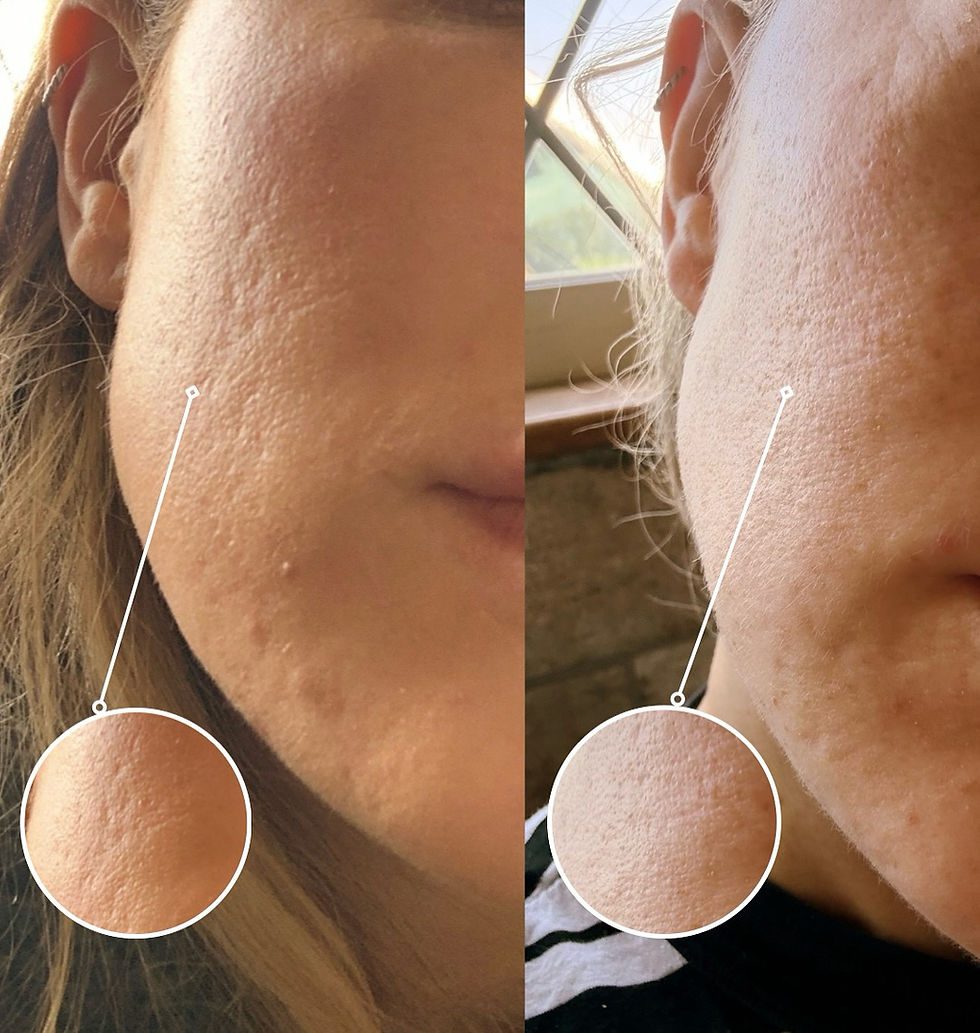
(Before and after: my skin following my acne scar protocol)
I always want to share authentic, unfiltered results. Healing isn’t instant — but with the right approach, visible, lasting change is possible.
Why Standard Acne Scar Treatments Often Fall Short
In my journey to improve my skin, I tried everything: laser resurfacing, plasma fibroblast, microneedling, and chemical peels. Each treatment can offer benefits, but I noticed a common issue — most were applied the same way for everyone, regardless of scar type or depth.
The problem is that acne scars are not all the same. Many are tethered, meaning fibrous bands anchor the skin to deeper layers, pulling the surface downward and preventing it from regenerating.
Practitioners are taught that acne scars form because collagen in scar tissue isn’t laid down in its natural basket-weave lattice. Instead, the fibres grow in parallel lines, which makes the skin less flexible and leads to visible dips and grooves.
However, what’s not always discussed in depth is that many scars are also tethered — fibrous bands that physically attach the scar to the tissue beneath.
If those tethered bands aren’t released, even the best resurfacing or collagen-stimulating treatments can only provide limited improvement. True scar revision requires both releasing the tethering and remodelling the scar tissue, while encouraging healthy collagen to rebuild the skin’s natural structure.

Understanding Different Types of Acne Scars
Recognising what type of scarring you have is the first step to understanding how your skin has healed — and why some areas can look and feel different. Acne scars can vary in depth, texture, and the way they form beneath the surface.
Rolling Scars – these create soft, wave-like depressions across the skin, caused by changes in the underlying tissue structure. They often give the skin a slightly uneven or textured appearance.
Boxcar Scars – appear as broader, more defined indentations with sharper edges. They can vary in depth and tend to be more visible under certain lighting, especially on the cheeks and temples.
Ice-Pick Scars – narrow, deep, and pin-like, these scars extend down into the skin and can be some of the most challenging to smooth out naturally over time.
Post-Inflammatory Pigmentation (PIH) – not a true scar, but discolouration that remains after inflammation. These marks can appear red, brown, or purple depending on your skin tone and gradually fade with time and consistent skin care.
Every scar tells a part of your skin’s story. Understanding the differences helps you appreciate how unique your healing journey is — and why patience and a thoughtful approach to care make such a difference over time.
Developing a Personalised Acne Scar Protocol
Through my training, research and hands-on experience in advanced aesthetic treatments, I’ve learned how much precision and patience true scar revision requires.
My acne scar treatment protocol combines a strategic mix of:
Microneedling techniques, using both multi-pin cartridges (such as 36-pin) and single-pin precision cartridges, depending on the type and depth of the scar. This allows me to release tethered scars with accuracy while also stimulating overall collagen renewal.
Polynucleotide therapy, to repair, hydrate, and rebuild tissue on a cellular level.
By adjusting these treatments based on how the skin responds, I can target both deep structural damage and surface texture — safely and effectively. This isn’t about quick fixes; it’s about creating sustainable, long-term results through science and care.
The biggest transformation came when I began treating scars as a structural issue, not a surface one. Once I started working with the skin — releasing the tension, restoring balance, and rebuilding from within — I saw smoother texture, softer contours, and a renewed glow that reflected more than just healthy skin, but renewed confidence.
Why I’m Passionate About Sharing My Story & Helping Others
I know how discouraging it can be to invest in treatments and see little change. My goal is to help others avoid that frustration by showing that there is a better way — one that respects both the science and individuality of your skin.
My personalised acne scar protocol focuses on release, rebuild, and restore — because true healing means giving the skin the chance to remodel itself naturally.
If you’ve tried acne scar treatments before and felt disappointed, the issue might not be your skin — it’s the approach. When we consider scar type, collagen structure, and skin response, we can finally move beyond temporary fixes and achieve real transformation.
Healing takes time, but with the right knowledge and personalised care, smoother, stronger skin is absolutely possible.
Comments